
IT Asset Disposal Process: From Collection to Recycling
A structured IT asset disposal process helps organisations securely and responsibly manage computers, servers, storage devices and other technology when they are no longer required. IT Asset Disposal, commonly known as ITAD, involves much more than simply collecting old equipment.
Depending on the project, the process can include secure collection, chain of custody, asset auditing, data sanitisation, asset recovery, reuse, recycling and final reporting.
This guide explains the main stages of an IT asset disposal project and what organisations should consider at each step.
1. Planning the IT Asset Disposal Project
First, a successful ITAD project starts before equipment leaves the organisation.
The first step is to understand:
- Which equipment is being retired
- Number of locations are involved
- Devices contain sensitive data
- Asset information needs to be recorded
- Equipment may have resale value
- What certificates or reports are required
- When collections need to occur
For larger or multi-site projects, agreeing on these requirements in advance helps maintain a consistent process across every location.
2. Secure Collection and Transport
Next, after confirming the scope, we prepare the retired equipment for collection.
Depending on the project, equipment may include:
- Laptops
- Desktop computers
- Workstations
- Servers
- Hard drives and SSDs
- Monitors
- Network equipment
- Storage systems
- Mobile devices
- Other business electronics
In particular, secure handling is especially important when equipment contains data-bearing storage. eWaste Sydney’s transport controls can include scheduled collection, GPS-tracked vehicles and 3-channel CCTV monitoring. As a result, these controls help maintain accountability while equipment moves from the client site to the processing facility.
3. Asset Identification and Audit Reporting
In addition, organisations may need detailed records of the equipment they have retired.
For example, an asset audit can record the following information depending on the agreed project scope:
- Asset tag
- Manufacturer
- Model
- Device type
- Serial number
- Processor
- Memory
- Storage capacity
- Drive serial number
- Equipment condition
- Final processing outcome
These records can help IT, finance, procurement and security teams reconcile retired equipment against internal asset registers.
Learn more about IT Asset Audit Reporting
4. Secure Data Sanitisation
Next, organisations need to determine the appropriate data sanitisation method before they reuse or recycle data-bearing equipment.
For example, when storage media supports software-based sanitisation, eWaste Sydney uses Blancco Drive Eraser. Successful erasures generate device specific reports containing information such as drive serial numbers, sanitisation results and verification information. However, software-based data erasure can be particularly valuable when the device remains suitable for reuse because the storage media does not need to be physically destroyed.
5. Physical Data Destruction Where Required
Software-based erasure is not appropriate for every device.
However, some storage media requires physical destruction when it is:
- Damaged
- Inaccessible
- Faulty
- Unsuitable for software sanitisation
- Required to be physically destroyed under the client’s security policy
Therefore, eWaste Sydney can arrange appropriate physical destruction through approved specialist partners when the media type or project requirements call for it.
Supporting documentation can also be provided depending on the agreed service.
View Secure Data Destruction Services
6. Assessing Equipment for Reuse
After data-security requirements have been completed, suitable equipment can be assessed for reuse.
For example, reusable equipment may be inspected for:
- Functionality
- Technical specifications
- Physical condition
- Age
- Market demand
- Refurbishment requirements
Therefore, where practical, we aim to extend the useful life of technology instead of sending functioning equipment directly into the recycling stream.
7. IT Asset Recovery and Buyback
In Addition, some retired IT equipment may still have commercial value.
For example, depending on its age, specification, condition and market demand, equipment may be suitable for:
- Asset recovery
- Buyback
- Refurbishment
- Reuse
- Resale
Asset recovery can help organisations offset part of the cost of technology refresh programs while extending the useful life of suitable equipment.
Learn more about IT Asset Recovery & Buyback
8. Responsible E-Waste Recycling
By contrast, equipment that cannot be reused or economically refurbished can move into the recycling stage.
Non-reusable equipment is processed through appropriate recycling channels so recoverable materials can be separated and processed.
Depending on the equipment, recyclable materials may include:
- Metals
- Plastics
- Circuit boards
- Cables
- Batteries
- Electronic components
This allows reusable equipment to remain in circulation while end-of-life technology moves into appropriate material recovery streams.
9. Certificates and Final Reporting
Meanwhile, the final stage of an IT asset disposal project is documentation.
Depending on the services selected, reporting can include:
- Asset audit reports
- Serial number records
- Blancco erasure reports
- Certificates of Data Destruction
- Certificates of Recycling
- Asset recovery reports
- Recycling weight summaries
- Estimated CO₂ savings
- ESG reporting
These records can support internal asset registers, information-security procedures, environmental reporting and audit requirements.
How ITAD Supports Multi-Site Organisations
IT asset disposal becomes more complex when equipment is located across multiple offices or facilities.
A coordinated ITAD program can apply consistent requirements across different sites for:
- Collection
- Asset reporting
- Data sanitisation
- Destruction
- Asset recovery
- Recycling
- Certificates
- Environmental reporting
This can provide organisations with a more consistent disposal process across their operations.
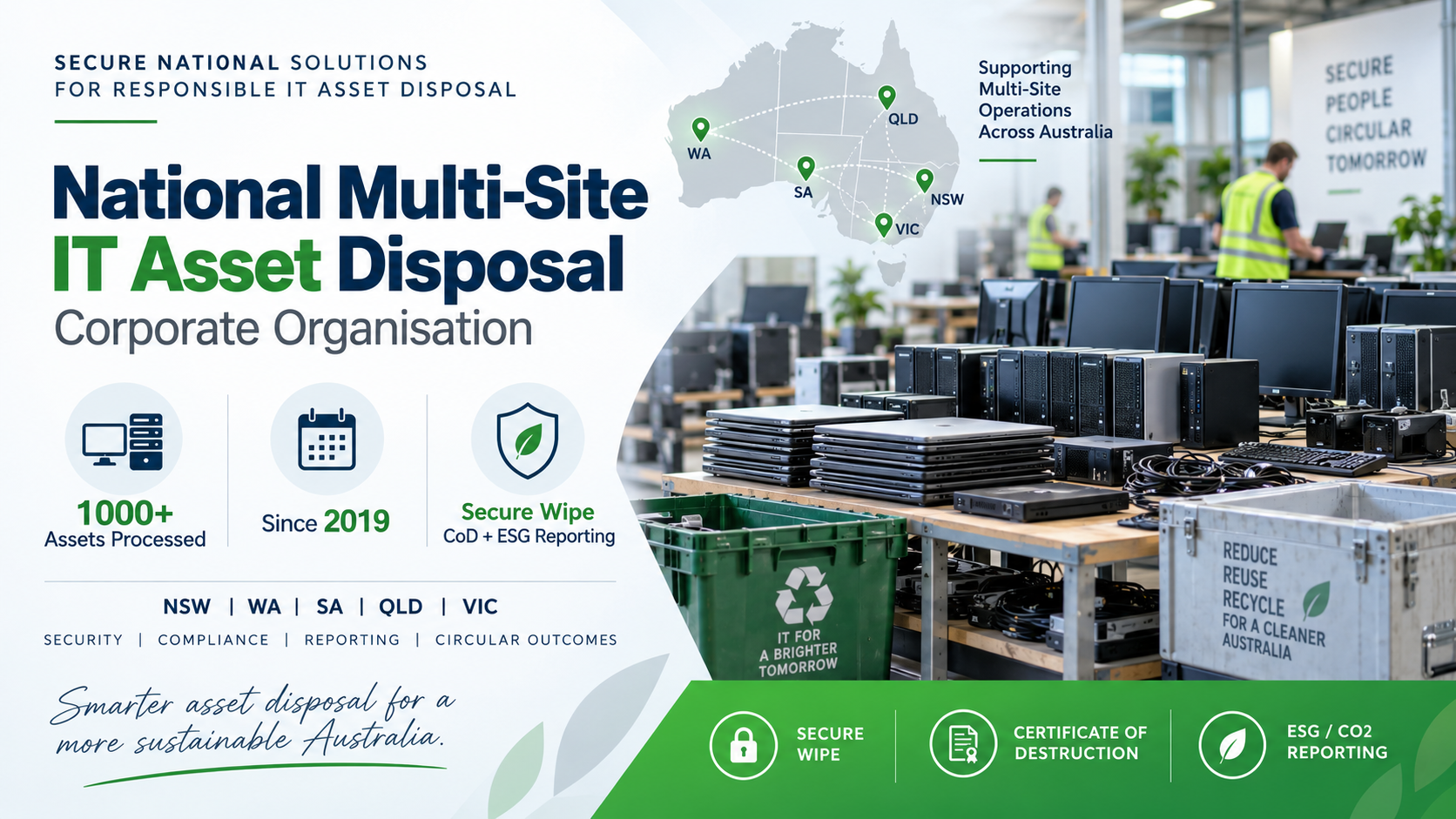
eWaste Sydney supports IT asset disposal projects across Australia, including ongoing multi-site programs.
View our National Multi-Site IT Asset Disposal Case Study
IT Asset Disposal for Data Centres
Similarly, Data centres often require additional controls because projects can involve large numbers of servers, storage systems, network devices and data-bearing drives.
A data centre ITAD project may include:
- Rack and equipment removal
- Serial number reporting
- Chain of custody
- Secure data erasure
- Physical destruction
- Asset recovery
- Server recycling
- Final reporting
View Data Centre Decommissioning & Server Recycling
What Should Businesses Look for in an ITAD Process?
Before selecting an IT asset disposal provider, organisations should consider questions such as:
- How will equipment be collected and transported?
- How are individual assets identified?
- How is data sanitised or destroyed?
- What evidence is provided after data destruction?
- Is reusable equipment separated from end-of-life equipment?
- Can remaining asset value be recovered?
- What certificates and reports are available?
- What environmental management processes are in place?
A well-structured ITAD process should provide clear answers to these questions before the project begins.
IT Asset Disposal with eWaste Sydney
eWaste Sydney provides end-to-end IT asset disposal services for businesses, healthcare providers, schools, government organisations, data centres, Managed Service Providers and multi-site organisations.
Our ITAD services can combine:
- Secure collection
- Chain of custody
- Asset audit reporting
- Blancco data erasure
- Physical destruction
- Asset recovery
- Reuse and refurbishment
- E-waste recycling
- Certificates
- ESG and environmental reporting
For commercial service information, visit our dedicated ITAD page: