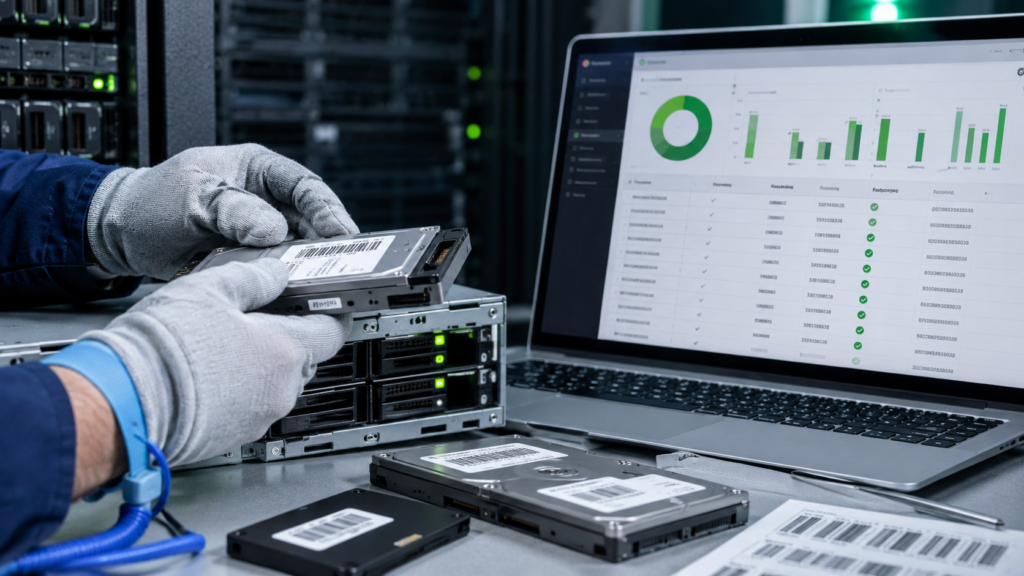
ITAD Chain of Custody: Records and Reporting Explained
ITAD chain of custody is the documented record of who holds retired IT assets and how those assets move through collection, transport, processing and final disposition. It connects physical equipment with the evidence of its treatment.
A good custody process helps your organisation investigate differences and reconcile results. However, the level of detail depends on the tracking and reporting scope you agree before collection.
What should ITAD chain of custody cover?
Start with the handover at your premises. Record the date, collection location, responsible parties and equipment scope. Where you need individual tracking, use serial numbers or asset tags rather than relying only on a bulk count.
Next, record receipt at the processing facility. Link any later erasure, destruction, reuse or recycling records to the agreed identifiers. Also document transfers to specialist partners where they form part of the service.
Collection and secure transport
Before collection, nominate an authorised contact and prepare a controlled staging area. Keep data-bearing equipment secure while it waits. Then check the handover record before signing.
eWaste Sydney’s published controls include GPS-tracked vehicles, CCTV-monitored transport and controlled warehouse access. These support the handling process. Nevertheless, vehicle monitoring alone does not establish what happened to an individual drive.
For that reason, agree the asset capture point and reporting fields as well as the transport controls. Our IT asset disposal service can include auditing and documented processing outcomes.
Connect assets to sanitisation evidence
A laptop serial identifies the computer. A drive serial identifies the storage device. If your audit needs both, ask the provider to link them in the report where available.
For example, a collection register might show laptop A and its installed SSD. A successful erasure report should identify the relevant drive. If erasure fails, the exceptions record should explain the next agreed action.
Read about secure data destruction and specify your required evidence before the team starts processing.
Records to request
- Collection date, location and handover acknowledgement.
- Asset count, equipment description and agreed identifiers.
- Facility receipt and any recorded differences.
- Transfers to specialist processing partners.
- Erasure or destruction method and result.
- Reuse, buyback or recycling outcome where tracked.
- Final reports and unresolved exceptions.
In addition, agree the report delivery timeframe and who can access the records. This makes the evidence easier to use in later audits.
How to reconcile a completed collection
- Compare the initial list with the collection record.
- Match the collection record to the received asset list.
- Check data-bearing assets against sanitisation results.
- Review missing serials, failed results and other exceptions.
- Confirm the agreed final outcomes and close unresolved items.
Our asset audit reporting can support this reconciliation. The ITAD service comparison also explains why a recycling certificate serves a different purpose from drive-level evidence.
Frequently asked questions
Does a recycling certificate prove chain of custody?
It can form part of the evidence, but a certificate alone may not document all handovers or individual assets. Review the complete agreed record set.
Can we track every device?
Individual tracking requires an agreed audit scope and usable identifiers. Confirm what the provider will capture and how it will report unreadable or missing serials.
Agree your reporting scope
Contact eWaste Sydney to discuss custody, asset identification and final reporting. You can also review our published certifications and handling controls.